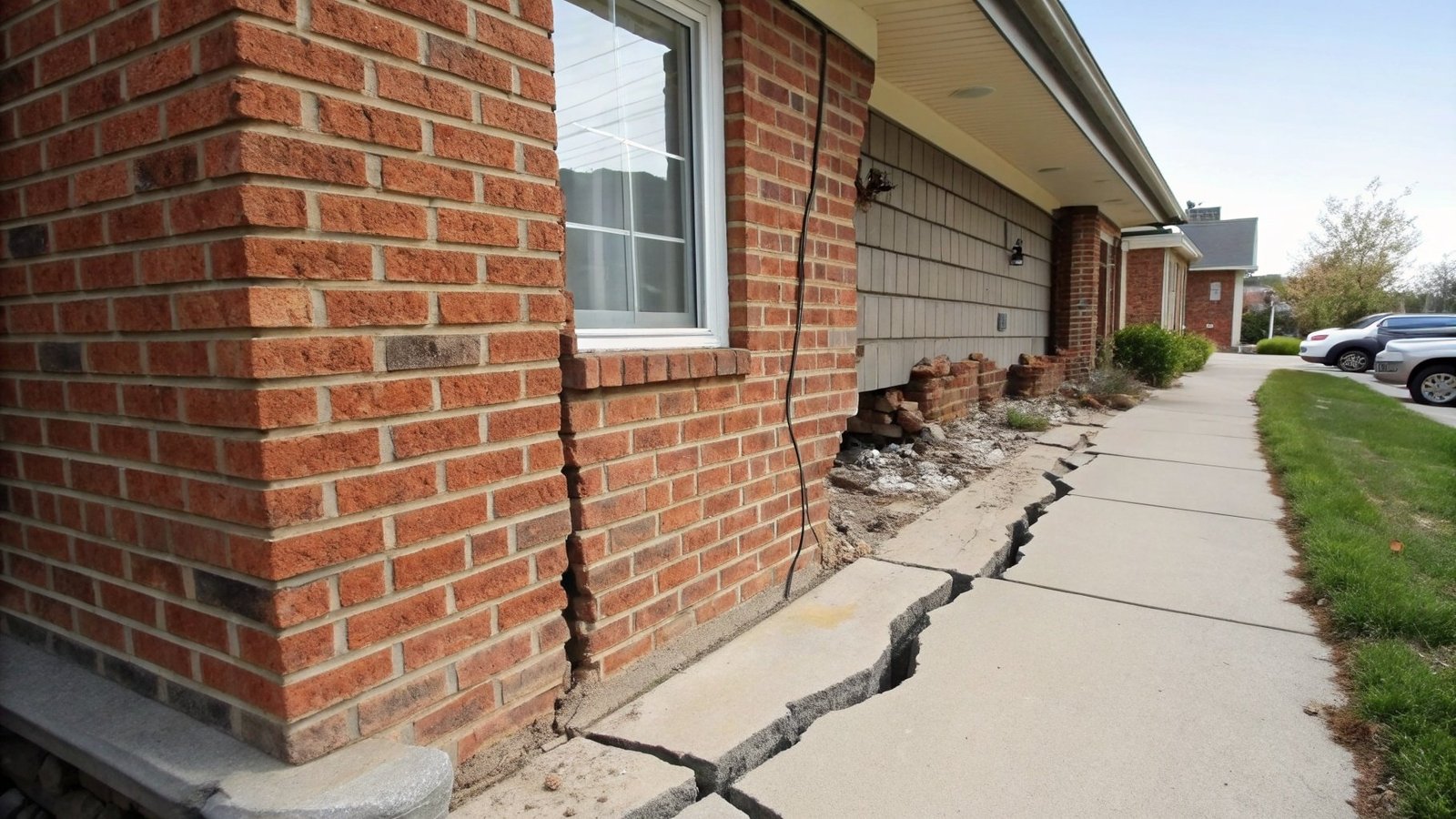
Subsidence and structural movement are among the most serious issues that can affect properties in Cardiff and South Wales. As experienced building surveyors who inspect hundreds of Cardiff properties each year, we understand how concerning it can be to discover structural problems during a property purchase or in your existing home.
This comprehensive guide explains everything you need to know about subsidence, structural movement, and related defects in Cardiff properties. We'll help you understand how to identify the warning signs, what causes these problems, and what action to take if structural issues are discovered during your property survey.
What Is Subsidence?
Subsidence occurs when the ground beneath a building sinks or moves downward, causing the property's foundations to sink with it. This downward movement creates stress on the building's structure, leading to cracks in walls, distortion of door and window frames, and in severe cases, significant structural damage.
Subsidence is different from other forms of structural movement like settlement (which is normal in new buildings) or heave (where the ground swells upward). Understanding these distinctions is crucial when assessing property defects, which is why a professional building survey from RICS qualified surveyors is essential.
Common Causes of Subsidence in Cardiff
Our qualified surveyors in Cardiff regularly encounter subsidence caused by several factors specific to the South Wales region:
- Clay Soil Shrinkage: Many areas of Cardiff have clay soils that shrink during dry periods and expand when wet. This cyclical movement can cause subsidence, particularly during hot, dry summers.
- Tree Roots: Large trees near properties can extract moisture from clay soils, causing them to shrink. Popular species in Cardiff gardens like oak, willow, and poplar are particularly problematic due to their extensive root systems.
- Leaking Drains: Water from leaking drains can wash away soil beneath foundations, creating voids that lead to subsidence. This is especially common in older Cardiff properties with Victorian-era drainage systems.
- Mining Activity: Some areas of South Wales have historical coal mining activity. While modern properties account for this, older buildings may be affected by mine workings or old mine shafts.
- Poor Original Construction: Properties built with inadequate foundations are more susceptible to movement. This is sometimes seen in Victorian terraces and properties built quickly during Cardiff's industrial expansion.
Identifying Subsidence: Warning Signs
As professional surveyors, we look for specific indicators of subsidence during property inspections. Understanding these warning signs helps property buyers and homeowners identify when to seek expert advice.
Cracks in Walls
Not all cracks indicate subsidence, but certain characteristics suggest serious structural movement:
- Diagonal Cracks: Cracks running diagonally across walls, especially starting from corners of doors and windows, are a key indicator of subsidence. These typically appear at 45-degree angles.
- Width: Cracks wider than 3mm (about the width of a £1 coin) require investigation. Cracks wider than 5mm are considered serious and likely indicate ongoing movement.
- Progressive Cracks: Cracks that continue to widen over time suggest active subsidence rather than historical movement that has stabilized.
- Location: Cracks near ground level, particularly at the corners of buildings, are more concerning than higher-level cracks which might be caused by other factors.
Door and Window Problems
Structural movement affects door and window frames. Our building surveyors check for:
- Doors and windows that stick or refuse to close properly
- Gaps appearing around frames where they meet walls
- Distortion of door and window frames from their original rectangular shape
- Difficulty opening or closing that has worsened over time
Other Warning Signs
Experienced surveyors also look for:
- Cracks in exterior brickwork, particularly stepped cracks following mortar lines
- Rippling or bulging of internal walls
- Sloping or uneven floors
- Gaps between walls and ceiling or floor
- Extension or conservatory pulling away from the main building
- Cracks in hard surfaces outside, such as paths and patios
Cardiff-Specific Subsidence Risk Areas
Certain areas of Cardiff have higher risks of subsidence due to soil types, historical development, or other factors. Our local knowledge as Cardiff surveyors helps identify properties that require particularly thorough inspection.
High-Risk Soil Areas
Areas of Cardiff with clay soils include parts of Canton, Whitchurch, Rhiwbina, and Llandaff. Properties in these areas, particularly those with nearby mature trees, require careful assessment for subsidence risk.
Victorian and Edwardian Properties
Cardiff's extensive stock of Victorian terraces, particularly in areas like Roath, Cathays, and Grangetown, were often built with shallow foundations. While these properties have stood for over a century, changes in the environment (like nearby tree planting or drain deterioration) can trigger subsidence.
Properties Near Trees
Cardiff is known as a "garden city" with many mature trees. Properties within 1.5 times the mature height of large trees are at higher risk. For example, a property 15 meters from a tree that grows to 20 meters tall falls within the risk zone.
The Survey Process: How We Identify Structural Issues
When conducting a building survey in Cardiff, our qualified surveyors follow a systematic approach to identify subsidence and structural problems.
Initial Visual Inspection
We start with a thorough visual inspection of the property's exterior and interior. This includes:
- Examining all elevations of the building for cracks and movement
- Checking alignment of walls using spirit levels
- Inspecting foundations where visible
- Assessing the condition of pointing and mortar
- Testing all doors and windows for proper operation
Measurement and Documentation
We carefully measure and document all cracks:
- Recording crack width, length, and location
- Photographing defects with scale references
- Mapping crack patterns on floor plans
- Dating mortar in cracks to assess age and progression
Environmental Assessment
Our surveyors assess factors that could cause or contribute to subsidence:
- Identifying nearby trees and vegetation
- Checking drain condition where possible
- Assessing soil type and ground conditions
- Reviewing historical survey records if available
- Considering local geology and mining history
Subsidence vs. Settlement: Understanding the Difference
Not all cracks indicate subsidence. As professional surveyors, we distinguish between different types of movement:
Settlement
Settlement is normal in new or recently extended buildings as they adjust to their foundations. Settlement typically:
- Occurs within the first few years of construction
- Stabilizes relatively quickly
- Produces smaller, hairline cracks
- Rarely requires significant remedial work
Subsidence
Subsidence differs from settlement because it:
- Can occur in properties of any age
- Tends to be progressive without intervention
- Produces larger, more severe cracks
- Requires foundation repairs to prevent further movement
Heave
Heave is the opposite of subsidence – where the ground swells upward. This can occur when:
- A large tree near the property is removed, allowing soil to re-hydrate and expand
- Clay soils expand after prolonged dry periods
- Water accumulates under foundations from blocked drains
What to Do If Subsidence Is Found
If our building survey identifies potential subsidence, we recommend a structured approach to addressing the problem:
1. Further Investigation
Our initial recommendation is usually to conduct monitoring over a period of 6-12 months. This involves:
- Installing crack monitoring gauges on major cracks
- Recording measurements at regular intervals
- Determining whether movement is active or historical
- CCTV drain surveys to check for leaks
- Tree surveys to assess root impact
2. Identify and Remove Causes
Before undertaking expensive repairs, address underlying causes:
- Repair or replace leaking drains
- Remove, reduce, or manage problematic trees (with proper permissions)
- Improve surface water drainage
- Repair cracked render or pointing that allows water penetration
3. Foundation Repairs
If active subsidence continues, foundation repairs may be necessary:
- Underpinning: Extending foundations to a deeper, more stable soil level. This is the traditional solution for subsidence.
- Resin Injection: Modern technique injecting expanding resin to stabilize soil and fill voids beneath foundations.
- Pile and Beam: Installing concrete piles deep into stable ground and connecting them with beams to support the building.
Insurance and Subsidence Claims
Most home insurance policies cover subsidence, but claims can be complex. Our experience as qualified surveyors helps clients navigate the insurance process:
Making a Claim
- Contact your insurer as soon as subsidence is suspected
- The insurer will appoint their own surveyor to assess the claim
- Be prepared for a monitoring period before repairs are approved
- Keep detailed records of all cracks and their progression
Policy Excess
Subsidence claims typically have a large excess, often £1,000 to £1,500. This means you'll pay the first portion of any claim.
Impact on Property Value
Subsidence affects property values and future saleability:
- A history of subsidence must be declared to potential buyers
- Properties with repaired subsidence may see values reduced by 10-25%
- Future insurance may be more expensive or difficult to obtain
- Mortgage lenders may be reluctant to lend on affected properties
Buying a Property with Subsidence History
If you're considering buying a Cardiff property with a history of subsidence, our qualified surveyors recommend:
Commission a Full Building Survey
A Level 3 building survey from experienced surveyors is essential. We will:
- Assess the quality and extent of previous repairs
- Check for any signs of ongoing movement
- Review available documentation and guarantees
- Advise on risks and recommended further investigations
Check Insurance and Guarantees
- Obtain copies of structural engineers' reports and repair specifications
- Check if repair work has a guarantee and how long it lasts
- Confirm the property can be insured at reasonable cost
- Understand any conditions or exclusions in future insurance
Price Negotiation
Subsidence history should be reflected in the purchase price. Our experience helps determine fair market value for properties with structural issues.
Prevention: Protecting Your Property
While not all subsidence can be prevented, homeowners can take steps to reduce risk:
- Tree Management: Keep trees at a safe distance from buildings. As a rule, trees should be no closer than 1.5 times their mature height.
- Drain Maintenance: Regularly inspect and maintain drains. CCTV drain surveys can identify problems before they cause subsidence.
- Gutter Maintenance: Keep gutters and downpipes clear to prevent water saturating soil near foundations.
- Soil Management: In dry weather, consider watering soil near foundations on clay soil to prevent excessive shrinkage.
- Regular Inspection: Monitor your property for early warning signs. Addressing minor issues early can prevent serious problems.
The Cost of Subsidence Repairs in Cardiff
Subsidence repairs can be expensive. Based on our experience with Cardiff properties, typical costs include:
- Monitoring and Investigation: £500-£2,000 for crack monitoring, drain surveys, and tree surveys
- Underpinning: £10,000-£50,000+ depending on the extent of work required
- Resin Injection: £5,000-£15,000 for a typical property
- Tree Removal: £500-£3,000 depending on tree size and access
- Drainage Repairs: £2,000-£10,000 for replacing or repairing drains
These costs highlight why comprehensive buildings insurance is essential for all Cardiff homeowners.
Why You Need a Professional Survey
Subsidence and structural issues are complex problems that require expert assessment. Our qualified surveyors in Cardiff bring:
- Local Expertise: Understanding of Cardiff's building stock, soil conditions, and common problems
- Technical Knowledge: Ability to distinguish between serious structural issues and minor cosmetic cracks
- RICS Regulation: Professional standards and indemnity insurance for your protection
- Detailed Reporting: Clear explanations and recommendations in accessible language
- Negotiation Support: Evidence to support price negotiations or requests for repairs
Conclusion
Subsidence and structural movement are serious issues that can significantly impact property values and livability. However, not all cracks indicate major problems, and even confirmed subsidence can often be successfully repaired.
The key is early identification and professional assessment. Whether you're buying a property in Cardiff or concerned about your existing home, a survey from experienced building surveyors provides the expert analysis you need to make informed decisions.
If you're concerned about potential subsidence or structural issues in a Cardiff property, our team of RICS qualified surveyors can help. We provide detailed building surveys that identify defects, explain their significance, and recommend appropriate action.
Need Expert Advice on Structural Issues?
Contact our team of qualified surveyors for professional assessment of subsidence and structural problems in Cardiff properties.
Get Expert Survey Advice